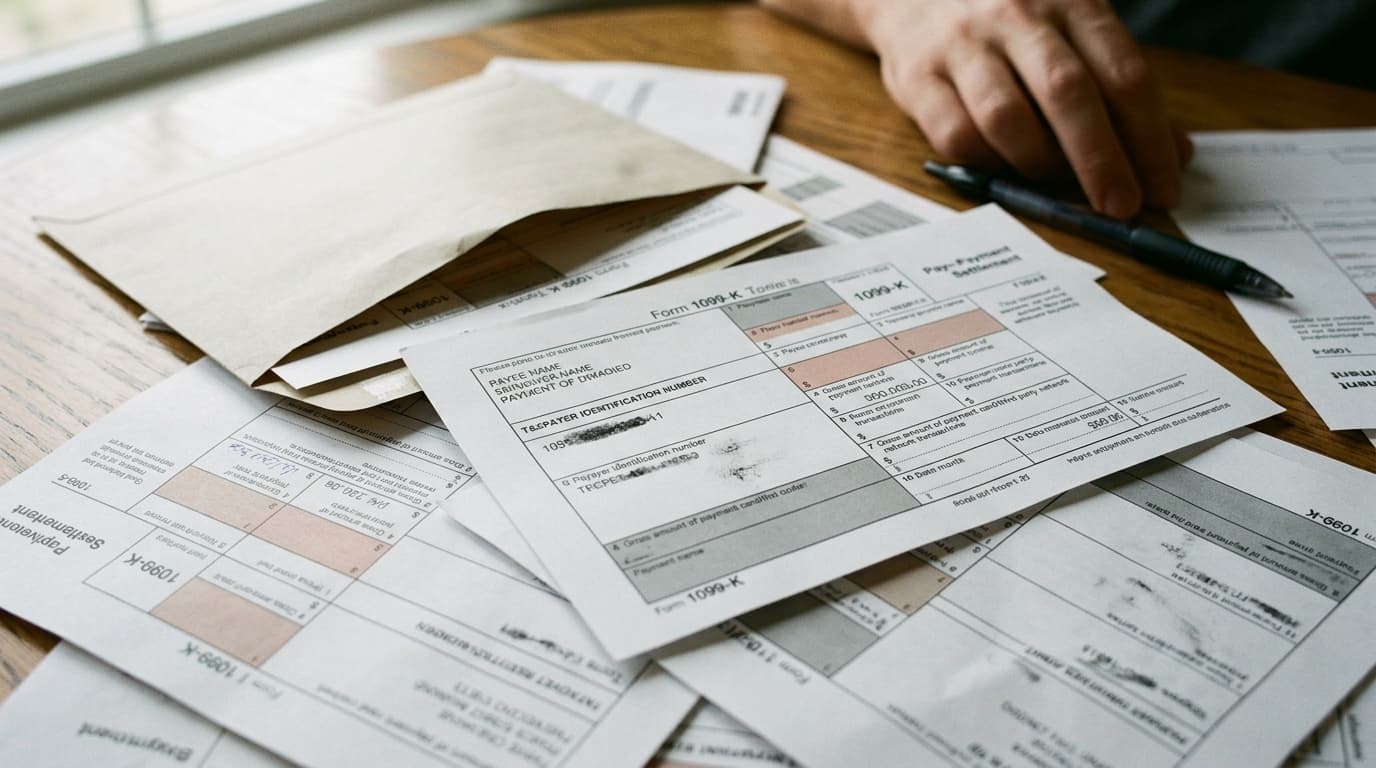
The 1099-K threshold for 2026 is $20,000 in gross payments and more than 200 transactions for third-party platforms like PayPal, Venmo, Cash App for Business, and Etsy. The One Big Beautiful Bill Act (OBBBA), signed into law in July 2025, retroactively reversed the $600 no-minimum-transaction rule that was scheduled to take effect for 2026, restoring the original 2011-era threshold instead.
TL;DR
- The federal 1099-K threshold reverted to $20,000 and 200+ transactions, retroactive to 2022, under OBBBA.
- A separate change raised the 1099-NEC and 1099-MISC threshold from $600 to $2,000, effective for payments made in 2026.
- Several states (Maryland, Virginia, Massachusetts, New Jersey, Illinois, Arkansas) still enforce lower 1099-K thresholds - don't assume every client is covered by the federal number.
1099-K Threshold 2026: What the Rule Actually Says
Under the reinstated federal rule, third-party settlement organizations (TPSOs) such as PayPal, Venmo, Cash App for Business, and Etsy only have to issue Form 1099-K to a seller who received more than $20,000 in gross payments AND completed more than 200 transactions in a calendar year. Both conditions have to be met. A seller with $30,000 in sales across 150 transactions stays under the wire; one with $8,000 across 250 tiny transactions also stays under it.
Two details trip up even experienced preparers. First, the form reports gross payment volume before fees, refunds, shipping, or sales tax are backed out, so the number on the form is almost never the client's taxable income. Second, payment card transactions (a client swiping a Visa through a card reader) have no minimum at all - a single $40 charge can generate a 1099-K if the processor chooses to report it, per the IRS's own guidance on Form 1099-K.
Why Did the $600 1099-K Rule Get Reversed?
The $600 threshold traces back to the American Rescue Plan Act of 2021, which the IRS delayed three separate filing seasons in a row rather than enforce as written. The agency set a $5,000 threshold for 2024 and a $2,500 threshold for 2025, with $600 originally set to finally apply for 2026 - until OBBBA killed that plan for good.
In July 2025, OBBBA retroactively reinstated the pre-2021 threshold of $20,000 and 200 transactions, applying it back to 2022 and every year since. The IRS confirmed the reversal directly in its own FAQ on the OBBBA 1099-K threshold change, which states the dollar limit reverts to $20,000. The lawmakers' stated reason was reducing paperwork for casual sellers and gig workers who were getting forms for garage-sale-sized activity that was never meant to trigger federal reporting.
1099-K vs 1099-NEC: How OBBBA Changed Both Thresholds
1099-K and 1099-NEC moved in the same bill but for different reasons, and firms that only track one of them risk missing the other. Here is what changed under OBBBA for the 2026 tax year, based on the 2026 reporting changes summary from Calibre CPA Group:
| Form | 2025 threshold | 2026 threshold | Key change |
|---|---|---|---|
| 1099-NEC (contractors) | $600 | $2,000 | Raised to cut small-business paperwork; inflation-indexed starting 2027 |
| 1099-MISC (rent, prizes) | $600 | $2,000 | Aligned with NEC, same inflation clause |
| 1099-K (apps, marketplaces) | $2,500 (delayed) | $20,000 + 200 transactions | Reverted to the original 2011 rule, retroactive to 2022 |
| Backup withholding | $600 | $2,000 | Matched to new NEC/MISC threshold |
The practical upshot: fewer 1099-NECs go out to small vendors, and fewer 1099-Ks go out to casual online sellers. Neither change touches whether the underlying income is taxable - only whether a form gets generated.
Do State 1099-K Thresholds Still Apply Below $20,000?
Yes. Several states never conformed to the higher federal threshold and still require a 1099-K at much lower dollar amounts. According to a Thomson Reuters state tax reporting update published May 19, 2026, Maryland, Virginia, and Massachusetts each still require reporting at $600 for third-party network payments. New Jersey sets its own line at $1,000, and Illinois triggers reporting at four or more transactions exceeding $1,000 combined. Arkansas uses $2,500 when no state tax was withheld.
California is the odd case: it conformed to the federal $20,000/200 rule for most TPSO activity but kept a separate $600 threshold specifically for payments to app-based drivers. If a client sells on Etsy in New Jersey, drives for a rideshare app in California, and takes Venmo payments for freelance work in Maryland, three different thresholds could apply to the same person in the same year.
What Should Your Firm Do Before the 2026 Filing Season?
Start by pulling a list of every client who received a 1099-K in the last two filing seasons and flag which ones will drop below the new federal threshold. Those clients need a heads-up now, not in January, because many will assume no form means no reporting obligation - and that assumption creates amended returns later.
Next, separate your review by form type. Check 1099-NEC and 1099-MISC vendor lists against the new $2,000 line, and check 1099-K activity against both the $20,000/200 federal rule and whatever your client's state requires. If your firm still tracks these thresholds by hand across spreadsheets and client emails, this is exactly the kind of repetitive, rules-based review that fits the list in accounting tasks to automate first.
Finally, update your client communication templates and engagement letters to reflect the new numbers, and loop this into whatever calendar you already use for 2026 estimated tax due dates so nothing gets buried during a busy quarter. If your firm is also weighing which software actually keeps up with these threshold changes automatically, that decision belongs in the same conversation as your broader practice management software choice for 2026.
How AI Helps You Track the 1099-K Threshold and Catch Mismatches
The threshold work above is exactly where an AI assistant earns its keep instead of just sounding impressive. Pointed at exported PayPal, Stripe, or Venmo transaction reports, an AI assistant can total gross payments and transaction counts per client and flag anyone sitting near the $20,000/200 line or a lower state threshold - work that otherwise means opening each platform report by hand.
It can also reconcile gross 1099-K totals against a client's actual bookkeeping in QuickBooks Online or Xero, surfacing the gap caused by fees, refunds, and settlement-date timing so you're not manually subtracting Stripe fees line by line. For clients spread across multiple states, it can hold the state-by-state threshold rules from this article and flag the ones that still apply below $20,000, cutting down the research loop every time a new client onboards. And it can draft the plain-English client email explaining why no 1099-K arrived this year but the income is still reportable, saving the same explanation from being typed out fresh for every client.
Which of these fits your firm depends on your client mix, your current software stack, and how much of this review is still manual - which is exactly what a free CloseRadar operations audit is built to spell out, with the specific tools and hours back for your firm rather than a generic list.