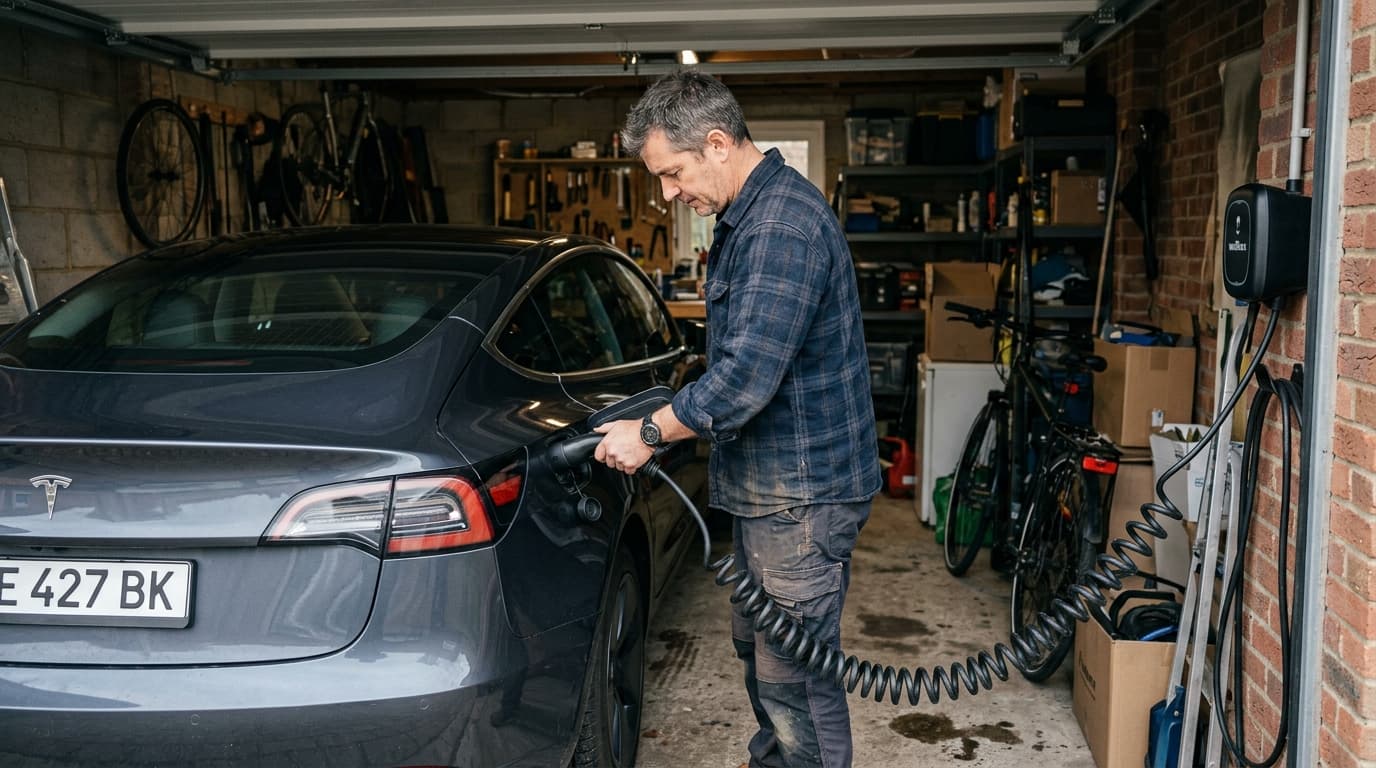
The ev tax credit 2026 answer is straightforward: the federal purchase credits for new, used, and commercial electric vehicles are no longer available for vehicles acquired after September 30, 2025, according to the IRS. The one federal EV incentive still running in 2026 is the home charging equipment credit, and it expires for property placed in service after June 30, 2026.
TL;DR
- New, used, and commercial clean vehicle credits (IRC §30D, §25E, §45W) ended for vehicles acquired after September 30, 2025.
- The home EV charger credit (IRC §30C) is still alive but only for equipment placed in service by June 30, 2026, capped at $1,000 per port.
- State and utility EV incentives can still apply even though the federal purchase credit is gone, so check state programs before telling a client there is nothing left to claim.
What Is the EV Tax Credit 2026 Status After OBBBA?
The ev tax credit 2026 status is that the main purchase credits are dead for anything acquired after September 30, 2025. The One Big Beautiful Bill Act (OBBBA), signed in 2025, moved up the expiration of the clean vehicle credits that were originally scheduled to run through 2032, and the IRS clean vehicle tax credits page now states flatly that the new, previously-owned, and commercial clean vehicle credits are not available for vehicles acquired after that date.
For most firms, this means the 2026 filing season is the first season where a client who says "I bought an EV this year" almost never has a federal purchase credit to claim. The conversation shifts from calculating the credit to explaining why it disappeared, and to checking whether the purchase actually closed before the cutoff.
Which EV Tax Credits Ended on September 30, 2025?
Three federal credits ended on the same date: the new clean vehicle credit, the previously-owned clean vehicle credit, and the qualified commercial clean vehicle credit. Before expiring, these credits topped out at up to $7,500 for eligible new EVs and up to $4,000 for eligible used EVs under a $25,000 sale price cap, per Kelley Blue Book's explainer.
If a client's purchase agreement, binding contract, or delivery happened on or before September 30, 2025, they may still be able to claim the credit on this year's return. If it happened after that date, the credit is gone regardless of income, vehicle price, or battery sourcing rules that used to matter.
Is There Still a Federal Credit for Home EV Chargers in 2026?
Yes, but only through June 30, 2026. The Alternative Fuel Vehicle Refueling Property Credit under IRC §30C covers 30% of the cost of qualified residential charging equipment, capped at $1,000 per charging port, and it generally requires the equipment to be placed in service by June 30, 2026, according to Recharged's 2026 EV tax credit guide and Caribou's update on the changes.
This is the credit worth flagging proactively for any client who bought an EV in the last two years and has not yet installed a home charger. If they install and place it in service before the deadline, they still get a real dollar-for-dollar credit; wait past June 30, 2026, and it is gone the same way the purchase credits went.
What About State EV Incentives in 2026?
State EV incentives are separate from the federal program and many are still running in 2026 even though the federal purchase credits ended. Coverage and amounts vary widely by state, with some offering rebates at the point of sale and others running their own tax credit or utility rebate programs, so a client-by-client check against their state's current program is the only reliable answer.
Do not assume a client has zero incentive left just because the federal credit is gone. A quick state lookup takes a few minutes and can be the difference between telling a client "nothing is available" and finding them a real, smaller credit they did not know about.
How Should Firms Handle Clients Who Bought an EV in Late 2025?
Firms should pull the purchase date, financing origination date, and dealer time-of-sale report for any client who bought an EV between mid-2025 and now, before deciding whether the credit applies. Some industry guides suggest eligibility turned on a binding contract plus payment by September 30, 2025, rather than delivery date, so treat delivery-date assumptions with caution and verify against the client's actual paperwork and current IRS guidance before filing.
This is also a good moment to revisit business vehicle purchases more broadly. Clients who missed the commercial clean vehicle credit may still benefit from the 100% bonus depreciation rules covered in our 2026 bonus depreciation guide, and clients using a personal or business EV for work should double check whether the 2026 standard mileage rate gives them a better deduction path than trying to chase an expired credit. If you are rebuilding your document request list for EV-related documentation this season, the checklist approach in our tax prep workflow SOP template works well for collecting purchase agreements and dealer certifications up front instead of chasing them in March.
EV Tax Credit 2026 at a Glance
Here is the full picture in one place, since clients rarely remember which credit applied to which vehicle type.
| Credit | Status in 2026 | Max Amount (before expiration) | Key Date |
|---|---|---|---|
| New clean vehicle credit (§30D) | Ended | Up to $7,500 | Vehicle acquired by Sept. 30, 2025 |
| Previously-owned clean vehicle credit (§25E) | Ended | Up to $4,000 | Vehicle acquired by Sept. 30, 2025 |
| Commercial clean vehicle credit (§45W) | Ended | Varies by vehicle | Vehicle acquired by Sept. 30, 2025 |
| Home EV charger credit (§30C) | Still active | 30% up to $1,000 per port | Placed in service by June 30, 2026 |
| State EV incentives | Varies | Varies by state | Check state program directly |
How AI Helps You Track EV Tax Credit Changes for Clients
The hard part of this season is not knowing the rules changed, it is checking every client's paperwork against the September 30, 2025 cutoff and the June 30, 2026 charger deadline without burning hours per file. An AI assistant like Claude or a tool built on OpenAI models can read a client's purchase agreement, financing document, and dealer certification, pull the acquisition date, and flag whether they fall before or after the cutoff, cutting a manual document review down from a per-client task into a batch check.
The same assistant can draft the client-facing email explaining why the credit is gone for post-cutoff purchases, or flagging which clients still have a window to install a home charger before June 30, 2026, so you are not writing the same explanation forty separate times. It can also cross-reference a client list against your state's current EV incentive program so nobody on your team has to manually check fifty state pages one by one.
Which of these wins are actually worth setting up for your specific client mix, versus something you would never touch, is exactly what a free CloseRadar operations audit is built to answer, since it looks at your firm's real workflow and tells you the tools and hours back instead of a generic AI wish list.