No tax on tips in 2026 refers to a federal income tax deduction, created by the One Big Beautiful Bill Act, that lets eligible tipped workers deduct up to $25,000 in qualified tips from their taxable income through 2028. Tips are still subject to Social Security and Medicare tax, and starting with 2026 wages, employers must report qualified tips separately on Form W-2.
TL;DR
- The deduction is capped at $25,000 per return, phases out above $150,000 MAGI (single) or $300,000 (joint), and only covers federal income tax — not FICA.
- The IRS finalized rules on April 13, 2026 (TD 10044), confirming over 70 qualifying occupations and a strict definition of "voluntary" tips that excludes automatic service charges.
- 2026 is the first year employers must report qualified tips in Box 12 (code TP) and a Treasury Tipped Occupation Code in new Box 14b of Form W-2 — the 2025 reporting waiver is gone.
What Is No Tax on Tips 2026 and Who Qualifies?
No tax on tips 2026 is shorthand for the section 224 deduction under the One Big Beautiful Bill Act (OBBBA), signed into law July 4, 2025. It allows both employees and self-employed workers in qualifying tipped occupations to deduct up to $25,000 of qualified tip income from their federal taxable income for tax years 2025 through 2028, whether or not they itemize, according to the IRS's own summary published March 5, 2026.
Two things trip up almost every client conversation. First, the deduction is worker-side only — it reduces federal income tax, but Social Security and Medicare taxes still apply, and employer payroll obligations do not change. Second, it phases out fast: $100 less deduction for every $1,000 of modified adjusted gross income above $150,000 for single filers ($300,000 joint), fully gone at $400,000 MAGI for a single filer claiming the full $25,000.
What Counts as a Qualified Tip Under OBBBA?
A qualified tip must be voluntary, set entirely by the customer, and reducible to zero without any penalty to the customer. Final IRS regulations published April 13, 2026 confirm that automatic service charges, mandatory gratuities, and any tip paid in cryptocurrency or other digital assets do not count, even if the funds eventually reach the employee's pocket, per RSM US's April 15, 2026 tax alert.
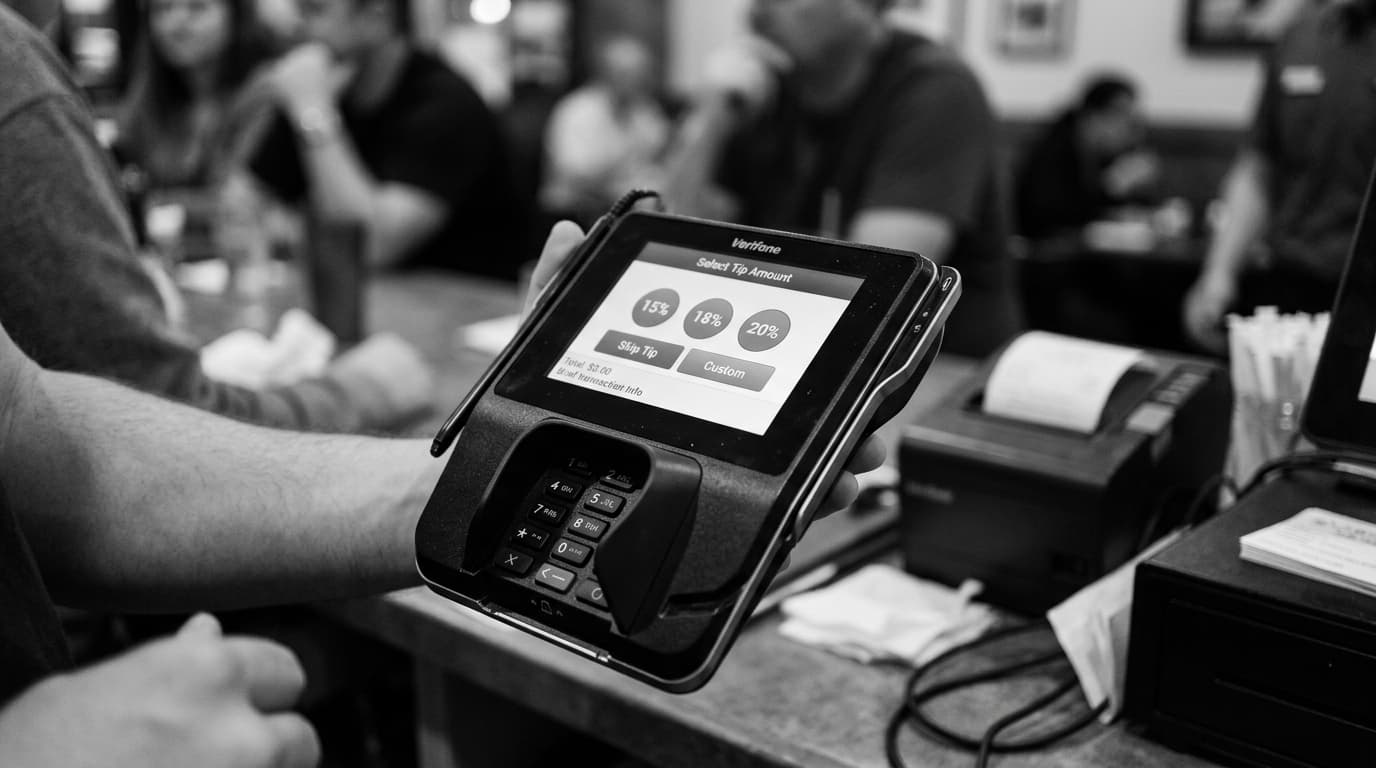
The point-of-sale detail matters more than most firms expect. If a receipt shows a non-negotiable auto-charge on the tip line, that amount is wages, not a qualified tip — full stop. But if the same receipt also has a separate "additional tip" line the customer can fill in, that added amount does qualify. And if the POS device never offers a genuine "no tip" button, only the portion above the suggested minimum percentage counts. For clients running restaurants, salons, or delivery services, this is a POS configuration review, not a legal opinion.
Which Occupations Qualify for the Tips Deduction?
Over 70 occupations qualify, grouped by the IRS into four Treasury Tipped Occupation Code (TTOC) ranges: 500s for personal services, 600s for personal appearance and wellness, 700s for recreation and instruction, and 800s for transportation and delivery. The list is closed — Treasury explicitly rejected requests to add unlisted roles on a case-by-case basis, per the same RSM alert cited above.
One nuance worth flagging for clients in professional services, health, or consulting: workers employed by a specified service trade or business (SSTB) are technically excluded from the deduction under the statute, but IRS Notice 2025-69 suspends enforcement of that exclusion until SSTB-specific final rules are issued. If a client runs a business that could be read as an SSTB with tipped staff, don't tell them they're automatically disqualified — tell them to watch for guidance, and document the transition relief in their file. This is the kind of gray-area timing question that belongs in an operations review rather than a quick email.
What Are the New 2026 Form W-2 Reporting Requirements?
Starting with tax year 2026, employers must report qualified cash tips in Box 12 using code "TP" and the worker's Treasury Tipped Occupation Code in a new Box 14b. The IRS waived separate tip reporting for 2025 wages, but that grace period is over, and no second waiver has been announced, according to AbitOs's April 14, 2026 employer compliance summary.
| Reporting Item | Tax Year 2025 | Tax Year 2026 |
|---|---|---|
| Qualified tip tracking | Not required — IRS waiver in effect | Required, separated from other wages |
| Form W-2 Box 12 | Standard codes only | Code "TP" for qualified tips |
| Form W-2 Box 14b | Did not exist | Worker's TTOC required |
| Penalty exposure | None for tip-specific reporting | Standard information-return penalties apply |
This changes what a bookkeeper or payroll-adjacent staffer needs to pull before year-end. It also changes what firms should be checking on 1099 forms for gig and contract tipped workers, which pairs naturally with the reporting-threshold questions covered in our 1099-K threshold guide — both are new information-return details that are easy to miss in a busy January.
Does No Tax on Tips 2026 Also Cover Overtime?
Yes, but it is a separate deduction with its own cap and its own W-2 line. OBBBA created a parallel "no tax on overtime" deduction worth up to $12,500 for single filers and $25,000 for joint filers, also running through the 2028 tax year, and also limited to federal income tax only, per ADP's June 2026 employer payroll guide.
The two deductions do not offset each other, and a client can claim both if eligible. For firms advising hourly-wage clients with tipped staff, this means two separate reconciliation checks at year-end: one for qualified tips against the TTOC list, one for qualified overtime hours against the client's time-tracking records. Treat them as related but distinct line items, not one combined "OBBBA box."
What Should Accounting Firms Do Before 2026 W-2 Season?
Firms with tipped-industry clients — restaurants, salons, hospitality, gaming, transportation — should build a short checklist now rather than in January. Start by identifying which client employees fall under a TTOC-listed occupation, then confirm the client's payroll provider can capture and code qualified tips separately.
- Pull each tipped client's current gratuity policy and flag any mandatory service charges that need to be reclassified as wages.
- Confirm the client's point-of-sale system offers a genuine zero-tip option; if it doesn't, the deduction available to their staff shrinks.
- Check with the payroll provider that Box 12 code TP and Box 14b TTOC fields are configured before the first 2026 payroll run, not after.
- Flag owner-operators and managers with 5%-or-more ownership — their tips are presumptively disqualified under the anti-abuse rule.
- Note this alongside other 2026 changes your clients are tracking, the same way you'd flag a mileage rate update in our IRS mileage rate roundup — it's one more line item in the same year-end conversation, not a standalone project.
How AI Helps Firms Manage No Tax on Tips Compliance
This is a document-heavy, detail-sensitive change, which is exactly where an AI assistant earns its keep instead of adding to the noise. Four concrete uses fit this specific workload:
- Matching employees to TTOC codes. Feed a client's payroll roster and job titles to an AI assistant built on Claude or OpenAI, and have it cross-reference titles against the IRS's 70-plus qualifying occupations, flagging ambiguous roles for you to confirm rather than guessing — this turns a manual lookup task into a five-minute review.
- Auditing POS and tip policy language. Upload a client's menu, receipt template, or POS settings screenshot and ask the assistant to identify whether the tip line meets the "reducible to zero" test — catching a disqualifying auto-gratuity clause before it costs a client's staff the deduction, rather than after an amended W-2.
- Reconciling Box 12/14b entries before filing. An automation built in n8n (hosted on RepoCloud for about $5/month) can pull payroll export data and flag any tipped employee missing a TTOC or a code TP amount, so you review exceptions instead of every W-2 line by hand.
- Drafting client explainer emails. Instead of writing the same "here's what changes for your tipped staff" email to every restaurant or salon client, an AI assistant can draft a first pass from your notes in minutes, giving you hours back across a client list during the tightest part of year-end.
The harder question isn't whether AI can help — it's figuring out which of these fits your specific mix of clients, staff, and existing software before you spend a weekend testing tools that don't apply, and that's exactly what a free CloseRadar operations audit is built to answer, with no credit card and no sales call required. It also pairs well with the broader question of what to automate first, covered in our guide to AI in accounting for 2026.